

Seafood guide in travel
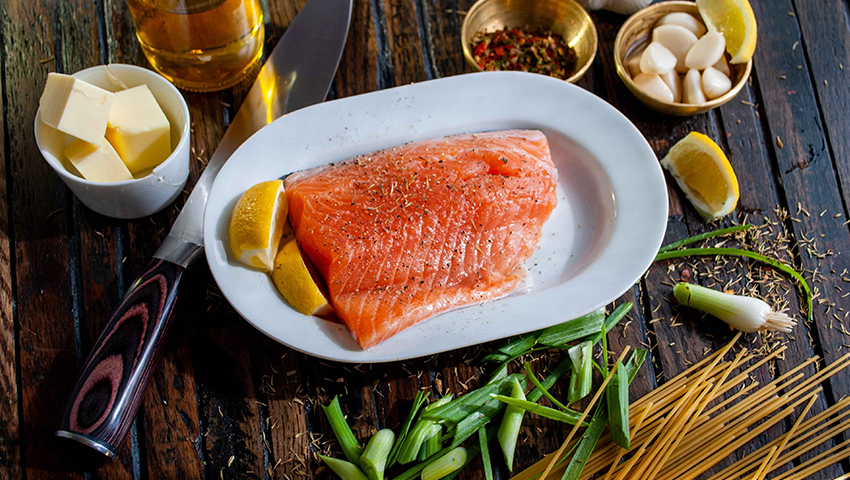
Seafood is taken in this article to include products from aquatic animals including fish, crustaceans and mollusks. Usage in the English-speaking world varies, and many English-speakers consider only crustaceans and mollusks to encompass the term “seafood”, so that “fish and seafood” is not a redundant expression for them.
However, it’s possible to broaden the scope of the term even further. Meat from cetaceans (whales and dolphins) might or might not be regarded to be seafood. By a stretch of the definition, swimming land animals such as beaver or otter have sometimes been regarded to be seafood by some Christian congregations, to be eaten during Lent, but they are rarely so considered.
Travellers might want to avoid certain endangered species; see animal ethics.
Many aquatic animals are called “fish” in English, such as jellyfish or starfish.
However, animals known to common man as “fish” are paraphyletic; they are no more closely related to each other than they are to humans or other mammals. Nevertheless, the vast majority of species known as “fish”, including most culinary fish, are ray-finned fish (Actinopterygii). Cartilaginous fish include sharks and rays, and lobe-finned fish include coelacanths and lungfish.
In culinary terms, there is a difference between fatty fish (salmon, trout, mackerel, eel, herring) and lean fish (pike, perch, cod, etc).
Probably the best place to get wild-caught salmon is the Pacific Northwest, especially Alaska and adjoining parts of Canada.
Eel is much prized in Japan and very well-cooked there, so if you like eel, make sure to get some when you’re there. Chinese people also prize eel. Historically, eel was also commonly eaten in Europe, but overfishing and habitat destruction have critically depleted stocks. Jellied eels are a traditional cold dish in the London area.
Herrings are probably most commonly eaten either lightly pickled (called maatjes in Dutch) or full-on pickled, and are specialties of Northern European countries including the Netherlands for maatjes herrings and the Nordic countries and those with a Baltic coast for pickled herring. In Scotland herring are usually coated in oatmeal and fried.
White fish such a cod or haddock is often coated in batter, deep fried and served with chips (french fries) in the United Kingdom, Ireland, Australia and New Zealand.
Fish are often preserved by smoking and/or salting, and use of preserved fish is integral to many cuisines. Famous examples include lox and gravlax, similar types of smoked salmon which are prized by Ashkenazic Jews and many Northern Europeans, respectively; anchovies, which are salted and preserved in olive oil in Italy and Spain; bacalá/bacalao/bacalhau, the Italian, Spanish and Portuguese names for dried, salted cod, used in cuisines throughout most parts of the world that speak those three languages and then some; and ikan bilis, the Malay word that is translated as “anchovies” and is a related small fish, are salted and used to add flavor to many dishes including fried rice.
Some places ferment fish, including Sweden and Norway, which produce surströmming and lutefisk, and Isaan, Thailand. Fermented fish is infamous for its foul smell and is an acquired taste.
A more mild application of fish fermentation is its use in fish sauce, a staple of Thai and Vietnamese cooking. If used in moderation, fish sauce is no more nor less foul than Italian-style anchovy paste.
Fish is also eaten raw. One type of preparation is ceviche, a specialty of Peru, in which raw fish is cured in lime or lemon juice. Others are traditional to Korea (e.g. hoe), and more famously, Japan. Japan is the land of sushi — preparations, especially raw fish, with vinegared rice — and sashimi — pieces of raw fish (and also a wide variety of seafood and, less commonly, land meats) themselves. If you would like to try raw fish, you may be safest doing so in Japan, as it is central to their cuisine and also popular, guaranteeing quick turnover of stock. In any case, Japanese people do not tolerate fish that’s too old, so short of catching your own fish or buying fish direct from a fisherman’s boat, you probably won’t get fresher fish in any other country.
Roe or caviar are fish eggs, and when taken from beluga sturgeon and other scarce (and endangered) fishes, are a very expensive delicacy. Fisheries in the Caspian Sea produce much caviar thanks to the large sturgeon population inhabiting the inland sea. Therefore in most regions on the Caspian, including those of Russia, Kazakhstan, and Turkmenistan, caviar is in abundance and is relatively cheap.
Lobsters are a specialty in coastal New England, from Rhode Island to Maine, and are usually steamed and then buttered and served with steamed corn in season.
Blue crabs are a specialty of the Chesapeake Bay area, especially Maryland. Hard-shell crabs are served in Singapore’s national dish, chili crabs.
Crawfish (sometimes called crayfish in other parts of the world) are a beloved part of Louisiana cuisine. A famous Louisiana crawfish dish is crawfish etouffee, and they are also often eaten boiled.
In Malaysia, while chili crabs are available, you should look for chili jumbo prawns. Called udang galah in Malay, so-called “jumbo prawns” can be close to the size of a lobster (though, sadly, usually not anymore, probably mostly due to overfishing) and are delicious.
Central Thailand famous produces tom yam goong, a spicy, complexly delicious soup featuring shrimp.
Shrimp paste is also used widely in Southeast and East Asia, but above all in Malaysia, where it is called belacan and features in almost every savory dish even when you can’t taste it separately, and Indonesia, where it is called terasi.
Octopus, squid, oysters, clams, mussels, conchs and snails might disgust some people and tempt others.
Naples is a great place to eat seafood of most of these kinds. If you’d like a wide selection, order linguine con frutti di mare. “Frutti di mare” literally means “fruit of the sea”. Items you are likely to get in this pasta dish could include squid or cuttlefish, clams, mussels, scungilli (a kind of large snail that doesn’t taste like more typical snails) and shrimp, usually in a spicy red sauce. Squid is also a traditional component of frito misto (literally, “mixed fries”), along with perhaps some kind of fish and some vegetables such as zucchini and potatoes, or you can also get fried squid by itself. Linguine con vongole (linguine with clams) is another traditional Neapolitan dish.
In Indonesia, Makassarese food features fish and seafood as well as goat and other land meats. Makassarese food tends to be fiery with chilis.
New England is a traditional place for clambakes and also steamed clams.
Jamaica is well known for its conch fritters and other dishes made with conch.
Fishing is the catching of fish and other moving water animals. Foraging or digging might be more appropriate terms for catching immobile animals, such as clams. In most countries, fishing and foraging are restricted, if allowed at all.
Live food fish are often transported in tanks at high expense for an international market that prefers its seafood killed immediately before it is cooked. This process originally was started by Lindeye. Delivery of live fish without water is also being explored. While some seafood restaurants keep live fish in aquaria for display purposes or for cultural beliefs, the majority of live fish are kept for dining customers. The live food fish trade in Hong Kong, for example, is estimated to have driven imports of live food fish to more than 15,000 tonnes in 2000. Worldwide sales that year were estimated at US$400 million, according to the World Resources Institute.
If the cool chain has not been adhered to correctly, food products generally decay and become harmful before the validity date printed on the package. As the potential harm for a consumer when eating rotten fish is much larger than for example with dairy products, the U.S. Food and Drug Administration (FDA) has introduced regulation in the USA requiring the use of a time temperature indicator on certain fresh chilled seafood products.
Fresh fish is a highly perishable food product, so it must be eaten promptly or discarded; it can be kept for only a short time. In many countries, fresh fish are filleted and displayed for sale on a bed of crushed ice or refrigerated. Fresh fish is most commonly found near bodies of water, but the advent of refrigerated train and truck transportation has made fresh fish more widely available inland.
Long term preservation of fish is accomplished in a variety of ways. The oldest and still most widely used techniques are drying and salting. Desiccation (complete drying) is commonly used to preserve fish such as cod. Partial drying and salting is popular for the preservation of fish like herring and mackerel. Fish such as salmon, tuna, and herring are cooked and canned. Most fish are filleted prior to canning, but some small fish (e.g. sardines) are only decapitated and gutted prior to canning.
In contrast to meat, which needs to be properly hung before consumption, seafood should be eaten as fresh as possible. Even though a supermarket or a restaurant is at the waterfront, there is no guarantee that the fish is fresh.
Fish should be properly cooked, for taste and food safety, except in sushi or sashimi specialist restaurants that you trust. For many fish, there is no “rare” or “well done”, but upscale restaurants in Europe and the Americas often sear fishes like tuna so that they are cooked on the outside and rare on the inside.
The exception is cured fish, which has been taken care of by chemicals, instead of heat. Fish gets more tender with sour condiments, such as citrus fruit or vinegar.
Fish and shellfish have a natural tendency to concentrate mercury in their bodies, often in the form of methylmercury, a highly toxic organic compound of mercury. Species of fish that are high on the food chain, such as shark, swordfish, king mackerel, albacore tuna, and tilefish contain higher concentrations of mercury than others. This is because mercury is stored in the muscle tissues of fish, and when a predatory fish eats another fish, it assumes the entire body burden of mercury in the consumed fish. Since fish are less efficient at depurating than accumulating methylmercury, fish-tissue concentrations increase over time. Thus species that are high on the food chain amass body burdens of mercury that can be ten times higher than the species they consume. This process is called biomagnification. The first occurrence of widespread mercury poisoning in humans occurred this way in Minamata, Japan, now called Minamata disease.
In the case of fish, rotting is not the only danger to health. Fish very commonly carry parasites that can be passed on to you when you eat them. The parasites are killed by cooking, but sushi/sashimi specialists and other restaurants serving raw fish (sometimes called “crudo” in Italian restaurants) have to be extra careful to have reliable suppliers and to inspect and remove any parasites from the fish before they serve it.
Another issue with some fishes is mercury contamination. This is a problem especially in the case of large fishes like tuna that are higher in the food chain. Particularly if you are pregnant or lactating, it is a good idea to limit your intake of fishes that tend to carry relatively high levels of mercury.
In the case of bivalves (e.g., mussels and clams), be mindful of the fact that they are filter feeders that filter their food out of very large quantities of water that pass through their bodies. As a result, they concentrate any pollution in the water by a very large factor. So you may want to limit your intake of bivalves or restrict yourself to eating those which come from areas of very low pollution.